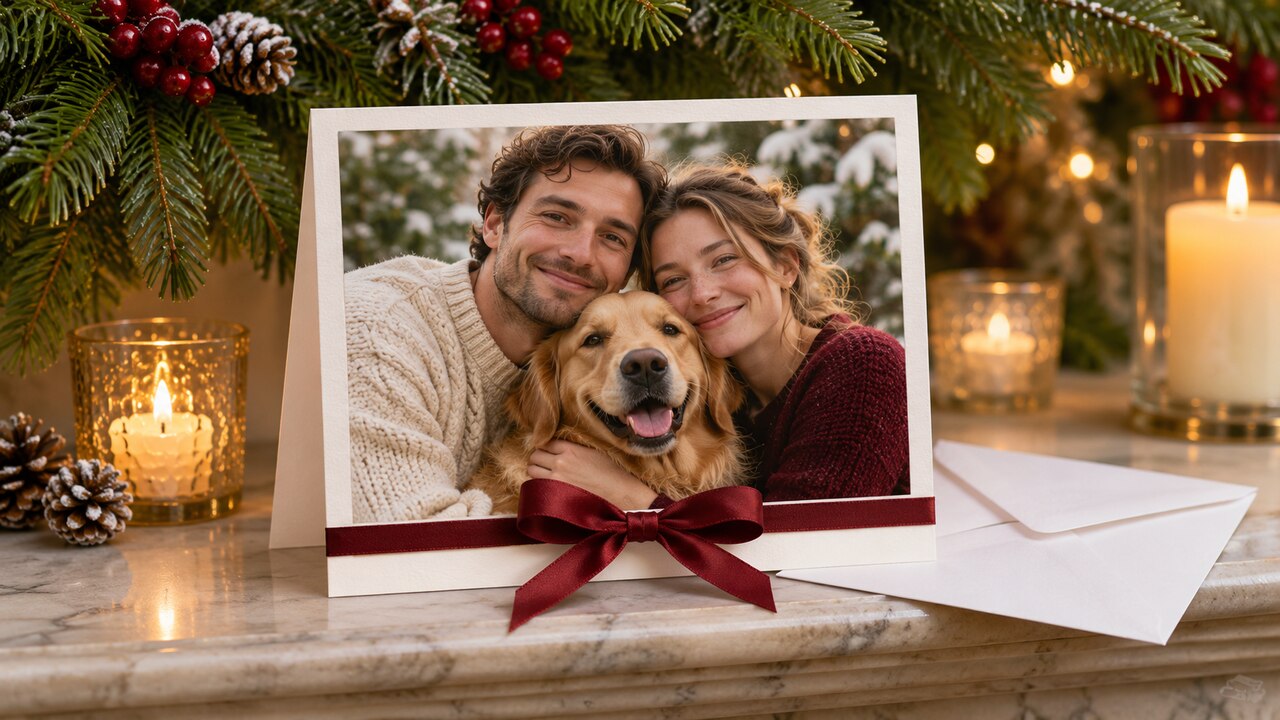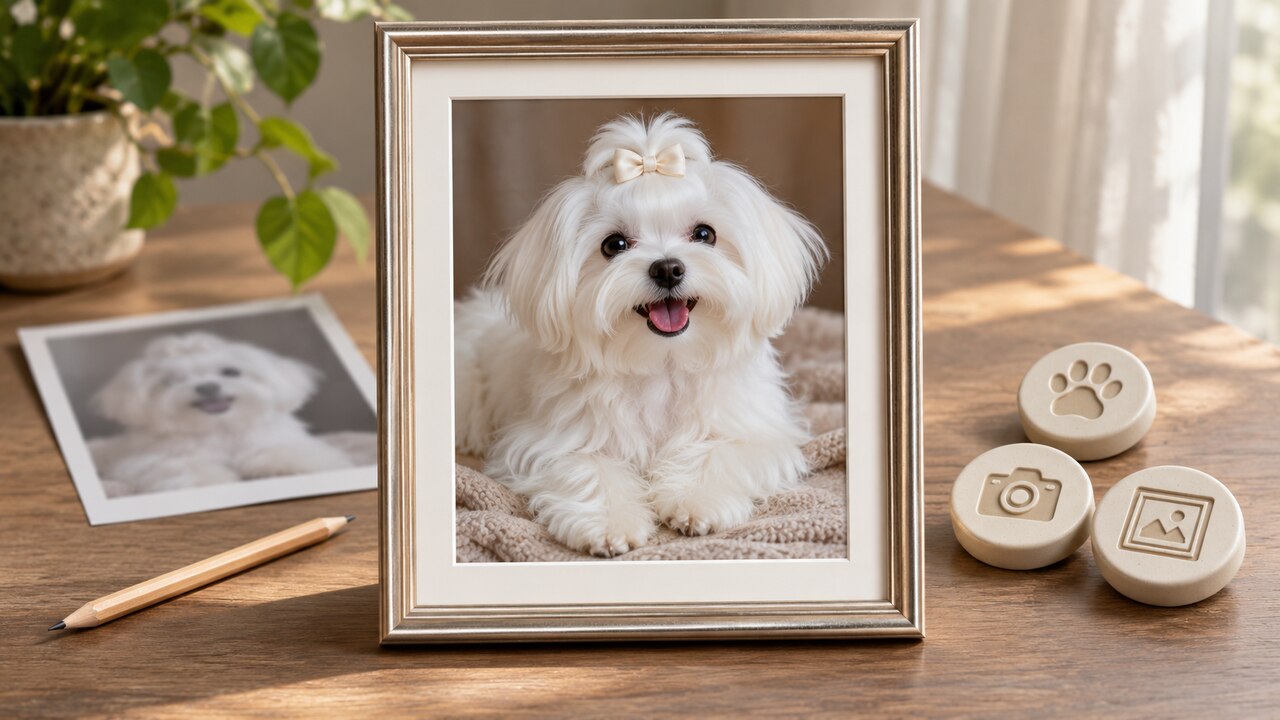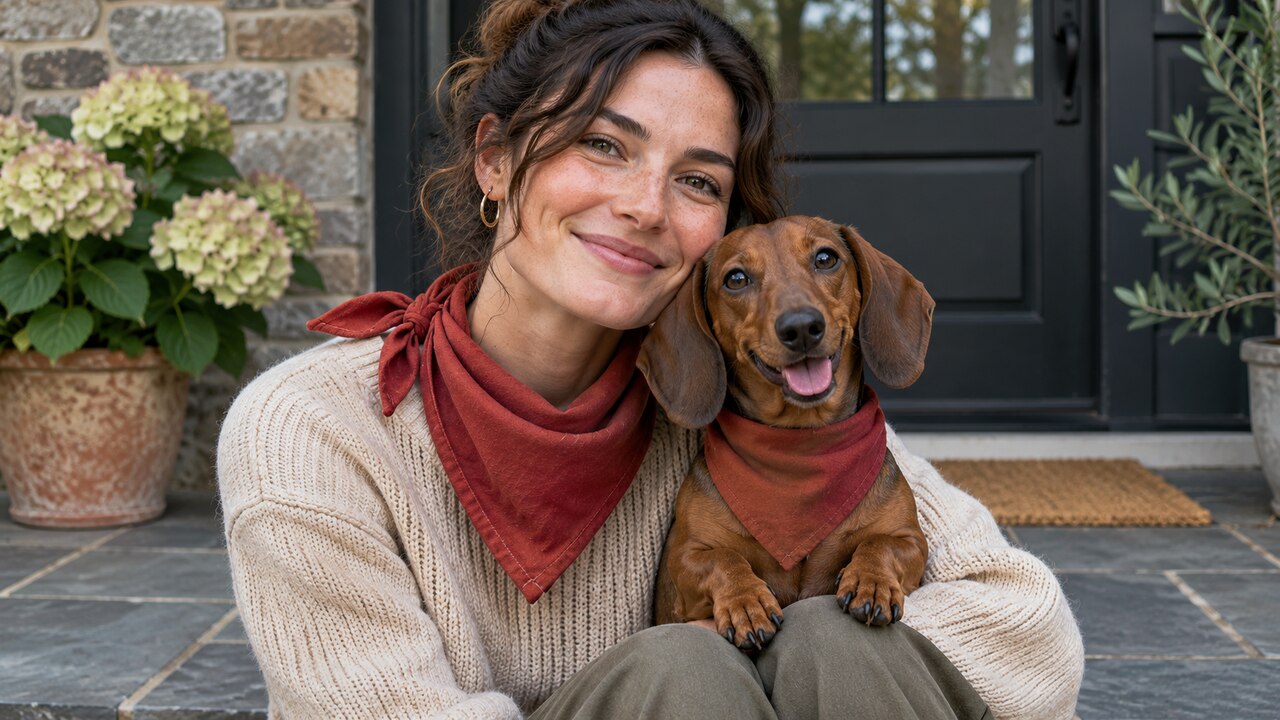
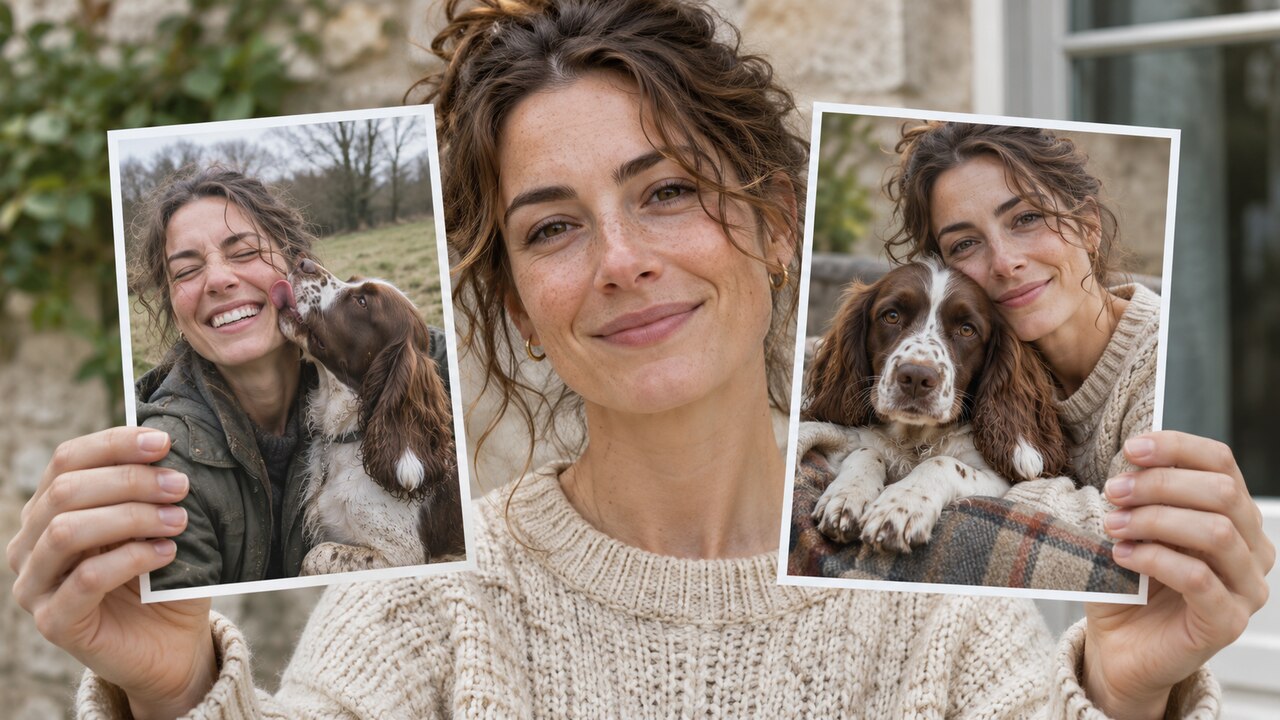
Every AI portrait tool shows you its best examples. This page does the opposite job: it tells you what to expect from the results that aren't on the marketing page — the first run where your face is 90% right, the one where your dog's white sock migrated to the wrong paw — so you can judge results fairly and know when a rerun is worth it.
The short version: a good AI portrait is recognizably you and unmistakably your pet, and it is not a photograph of you. Everything below is what that sentence means in practice.
What "looks like you" means for a person
AI models are good at structure and proportion: the shape of your face, your hairline, your glasses, your general build. Where they are honestly weaker is at exact replication — the specific way your smile folds, a mole's precise position, the exact width of your jaw. In practice this means:
- People who know you will recognize you immediately, in most good results.
- You will notice differences from the mirror that nobody else would.
- Different runs of the same prompt give faces that are siblings of each other, not twins.
None of this is a defect you can prompt your way around completely — it is how reference-guided generation works. References steer; they do not lock.
What "looks like them" means for a pet
Here the news is better. Pet identity lives in markings and build — the white blaze, the patch over one eye, the socks, the tail tip, the length of the coat, the proportions of the body — and models reproduce these far more reliably than human facial detail, when the markings are stated in the prompt and visible in the reference. When a pet portrait misses, it is usually because:
- the reference photo didn't clearly show the pattern (a dark cat on a dark couch), or
- the prompt never named the markings, leaving the model to guess from a small reference crop.
Both are fixable before the next run — the markings guide covers exactly how.
The checklist: judging a result in sixty seconds
Before deciding keep-or-rerun, look at the result the way a photographer would:
- Structure first. The right number of limbs and paws, hands that hold instead of merge, a collar that obeys gravity.
- Your face, in proportion. Not "is this my passport photo" — "would a colleague recognize me."
- The markings map. Open your pet's reference photo next to the result and check blaze, patches, socks and tail tip one by one. This is the single highest-yield check.
- The interaction. Where your hand meets the coat, where the two bodies lean — plausible contact is what separates "portrait" from "collage."
If a result passes all four, keep it even if it isn't perfect. A 95%-likeness portrait you actually have beats a theoretical 100% you never reach.
When to rerun — and what it costs you
Rerun when the miss is specific and named: "the white sock is on the wrong paw", "my glasses vanished", "the pose looks stiff". Don't rerun over a vague feeling — you'll change ten variables and lose the good parts of the result you had.
Be aware that each run costs credits, and the generator always shows you the exact amount before you submit. A typical portrait takes a small number of runs, not dozens — and if a generation fails outright (a rejected or errored run), you are not charged for it. The cost guide breaks down where the credits actually go.
What we won't promise
Three things you should not believe from any AI portrait tool, including ours:
- "100% likeness, guaranteed." No reference-guided system delivers that, and the honest version — recognizability, checked by you — is the actual product.
- "One click, no reruns." Treating the first result as a draft is the intended workflow, not a failure state.
- "It works the same in every style." Painterly and illustrated styles deliberately trade photographic likeness for atmosphere. That's a feature — choose the style with the styles comparison in mind.
Frequently asked questions
Why does my face look slightly different in every run?
Because the model renders your face from the reference each time rather than storing a fixed template of you. Small variation between runs is normal; picking the best of a few results is the intended way to use it.
My pet is right but my face is the weak part. What do I change?
Usually the reference, not the prompt: a front-facing, evenly lit photo with your full face visible gives the model far more to work with. A hat, sunglasses or heavy side-lighting in the reference costs likeness in every run that follows.
Do failed generations cost credits?
No. A run that fails or is rejected is returned automatically. You pay for results.
Can I get a do-over weeks later in the same style?
Yes. Reuse the same references and prompt — the face will be a close sibling rather than pixel-identical, which is exactly the expectation to hold.