Twinning — you and your pet in matching outfits — is the purest fun in pet portraiture, and it has one rule that separates the delightful from the doll-like: match the concept, not the costume. A dog in a scarf that matches your scarf reads as a moment; a dog forced into a full outfit with sleeves reads as a costume party. Here's what twins well and how to get it into a portrait.
What twins well, by species
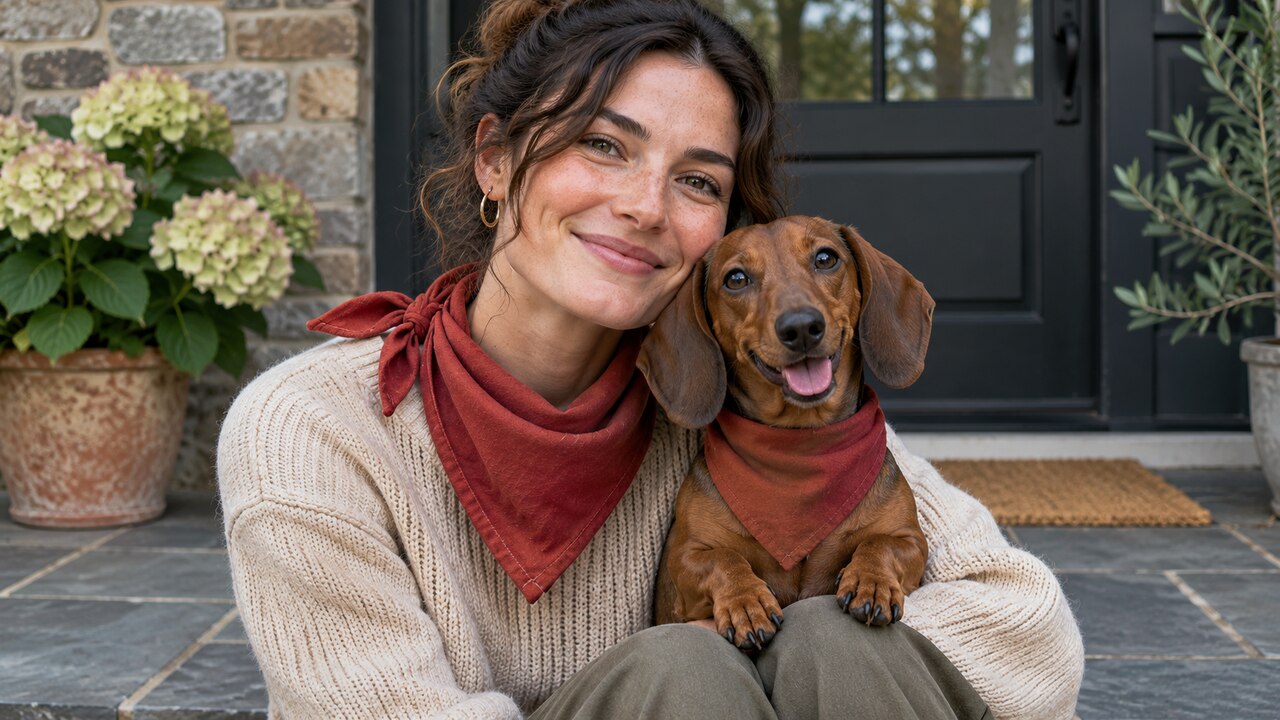
- Dogs: bandanas, scarves, neckerchiefs — the neck is the natural canvas. Matching hoodies work for short-haired, calm dogs. Winter: matching knit beanies for you, a matching collar cover for them.
- Cats: think fabric, not garment — a bow tie on the collar, a bandana (loosely tied, clearly tolerated). Never sleeves; a cat in sleeves is a photograph of resentment.
- Small pets: a matching fabric element near them — the same plaid blanket, the same bandana draped on their favorite spot.
The scale trick: match color and texture rather than the garment itself. Your plaid scarf + their plaid bandana twins harder in the photo than identical garments would.
Seasonal and occasion ideas
- Autumn walk: matching rust-orange knits — your sweater, their bandana, an orchard scene.
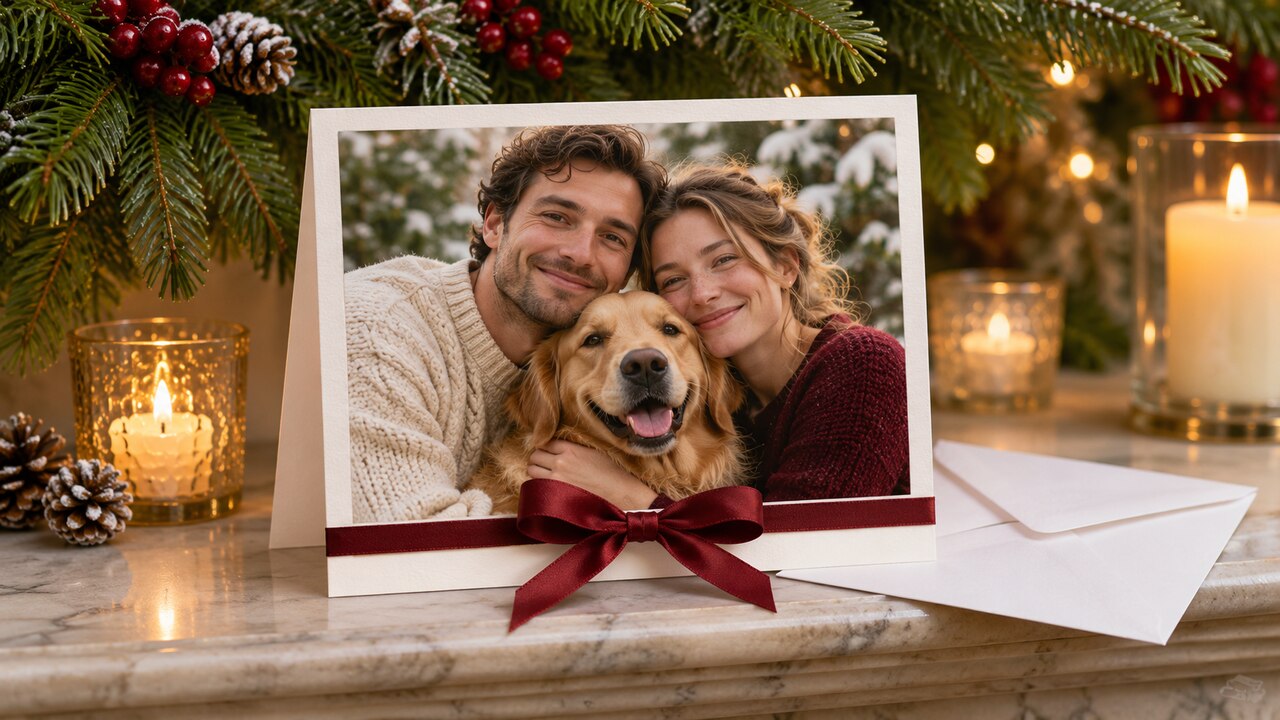
- Holiday card: coordinated reds and creams, one accent each; deeper seasonal ideas in the card guide.
- Sports day: same team scarf/collar on the couch watching the match.
- Workout pair: matching headband energy — you in gear, them in a bandana, both on the yoga mat.
- The formal version: you in a tie or pearls, them in a bow tie on the collar — the formal portrait ideas in twin form.
Prompting dressed animals
Two habits keep clothing on pets looking natural in generation:
- Describe the clothing as the animal wears it, simply: "the dog wears a rust-plaid bandana loosely tied" — one clause, placed with the subject description. Overdescribing garments invites overbuilding them.
- Keep the face completely clear. Nothing on the eyes, nothing hanging over the muzzle, hats off unless the animal genuinely wears one. The face is where likeness lives — the expectations guide — and accessories near it are where renders wobble.
And the standard identity machinery still applies: references plus the markings sentence, verbatim, per the markings guide — a bandana sits right where a chest marking is, so name it.
The accessories that quietly ruin portraits
- Sunglasses on a pet — hides the eyes the model needs most, and renders oddly.
- Full sleeves and trousers on quadrupeds — anatomy conflicts, guaranteed reruns.
- Anything with text — lettering is the classic model failure; a plain bandana beats a slogan bandana every time (more tells here).
Real outfit or generated outfit?
Both, honestly. If the real bandana exists, photograph the pet wearing it — that reference is gold. If it doesn't, let the portrait generate it: "matching rust-plaid" in the prompt dresses both of you in one line, which is half the fun of the medium. That's also the easiest twinning route — no pet ever has to tolerate a costume for the matching photo to exist.
Frequently asked questions
Do pets hate wearing clothes for the photo?
Most tolerate neck items; sleeves are widely hated. The prompt route in this guide exists precisely so the twinning portrait never requires the real costume — generate the outfit instead of buying one the pet will veto.
How do I keep the match looking intentional, not gimmicky?
One matching element, one accent color, everything else calm. Twinning reads as charming when the scene is quiet around it.
Best style for a twinning portrait?
Studio or cinematic for maximum charm-to-chaos ratio; illustration if the twinning is for a card or kids' room — styles compared.