Almost every good pet photo ever taken on a phone comes from the same handful of decisions — none of which involve buying anything. This guide covers those decisions: light, angle, background, attention, and the small set of shots that are always worth having, especially if you plan to turn one of them into a portrait later.
Get on their level
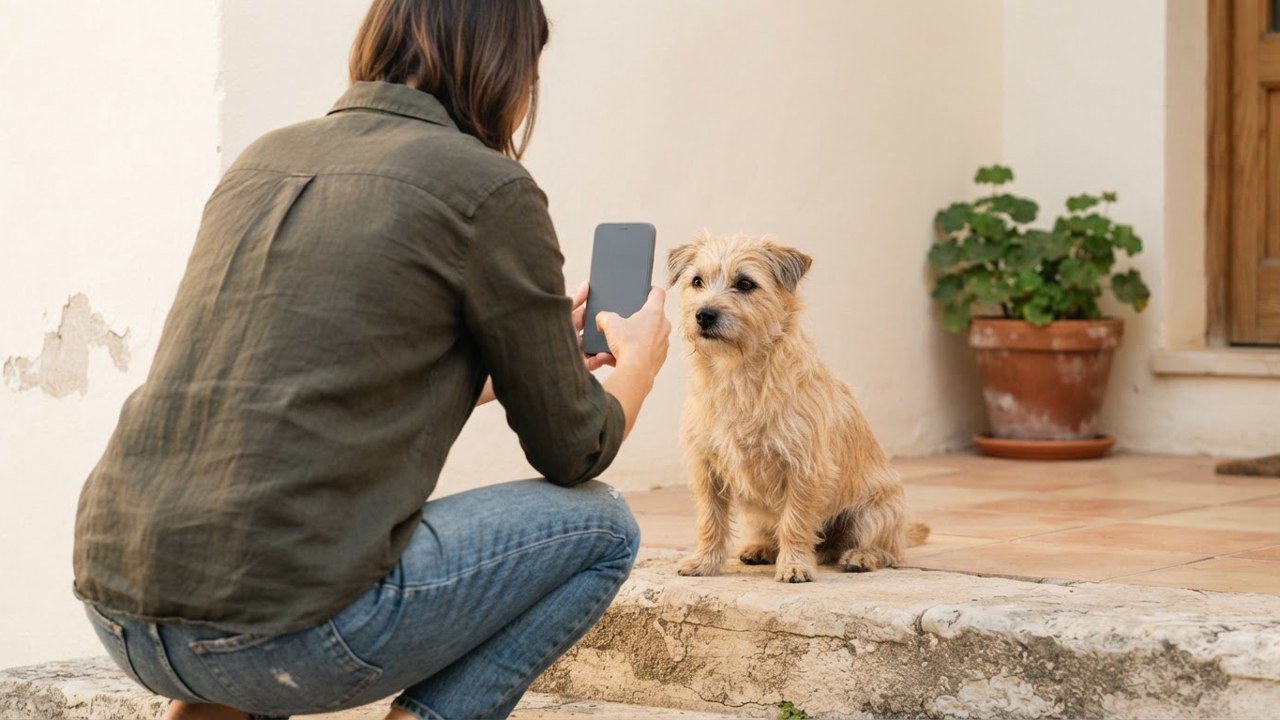
The default pet photo is taken from human height, looking down — which flattens the animal and fills the background with floor. Lower the phone to their eye level instead, even if it means kneeling or lying down. The change is dramatic: eye-level shots show the face properly, separate the pet from the floor, and instantly look intentional rather than grabbed.
For cats and small dogs, this often means the floor is your studio. It's worth it.
Light is the whole game
You don't need a studio; you need one window and the habit of using it.
- Face the window, don't have your pet back it. Put the pet between you and the window so the light falls on their face. Shooting toward the window instead silhouettes them.
- Mornings and late afternoons give soft, warm, directional light. Midday sun through a window is harsh and makes pets squint.
- Overcast days are secretly great — clouds are a giant softbox. The light is even, and coats show their true color.
- Never use the flash. It flattens the fur, frightens many animals, and turns eyes into green marbles.
Dark-coated pets need their own approach — more light, a lighter background, and a tap on the exposure. That guide is here.
Clean up the background before you shoot
The fastest upgrade to any photo: take ten seconds to move the clutter behind your subject. A laundry basket or dish rack in the background competes with the pet for attention and can't be fixed convincingly later.
Two simple moves: shoot with the pet a step or two in front of the background (a wall, a hedge, a couch) so the background blurs slightly, and prefer backgrounds a few shades lighter or darker than the coat.
Getting them to look at the camera
The honest truth: you cannot make a pet pose. You can bribe and time.
- Sounds beat treats for attention — a kissy noise, a crinkling bag, their name in a tone you don't normally use. The ears-up, eyes-forward moment lasts about two seconds; that's what burst mode is for.
- Hold the lure next to the lens, not above it — above gives you a chin-up, nostrils-first pose.
- Shoot after play or before meals, when they're alert but not climbing the walls. A tired cat is relaxed; a hungry dog is paying attention.
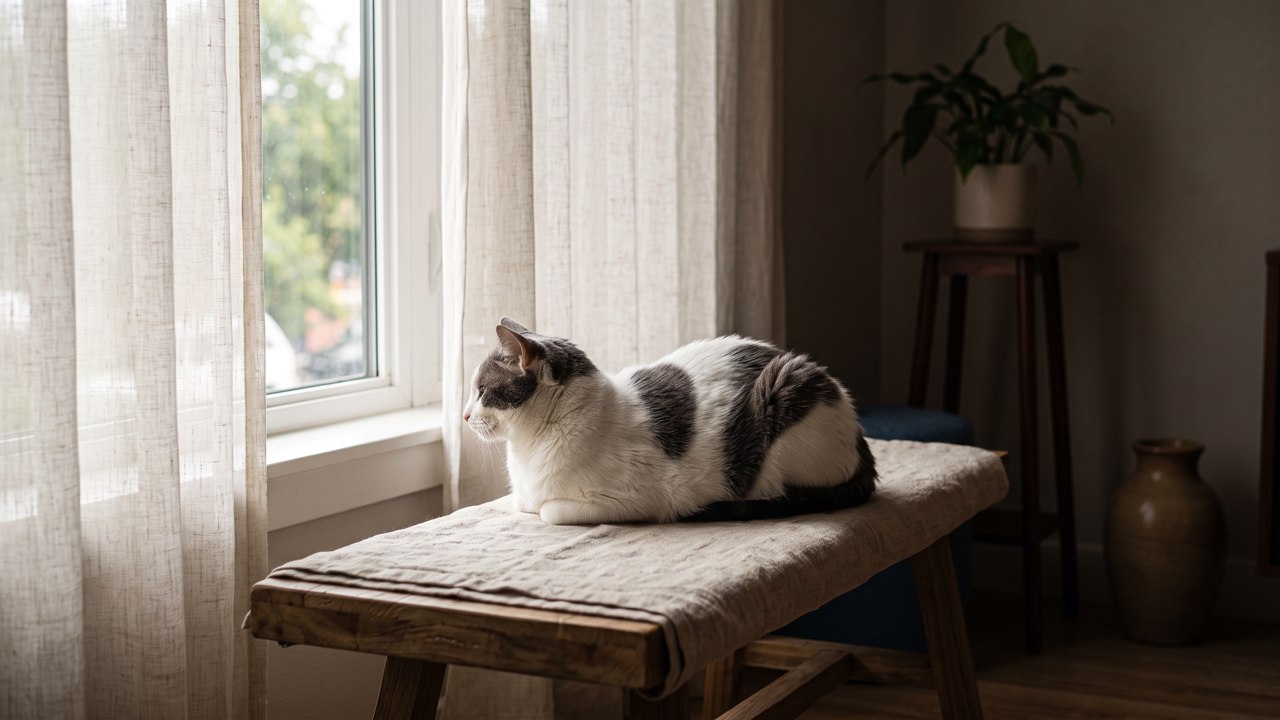
- Let them ignore you. Some of the best pet photos are candids — a sleeping curl, a window stare. Don't wait for eye contact to press the button.
Phone settings that matter
- Burst mode for anything moving. Twenty frames, one keeper — that's a good ratio.
- Tap to set exposure on the pet's face, then drag the slider if the coat looks too dark or washed out. The camera's default guess is aimed at the whole scene, not your subject.
- Move your feet instead of zooming. Digital zoom softens fur detail — and fur detail is most of a pet photo.
- Clean the lens. A pocket-dirty lens is the most common cause of mysteriously hazy pet photos.
The five shots worth always having
These five framings cover nearly everything — and they're exactly what feeds a good AI portrait reference set:
- The face close-up — eyes sharp, from the front or three-quarter.
- The full body, side-on — the single most underrated shot; it records build and the complete coat pattern.
- The markings shot — a close-up of whatever makes your pet unmistakable: the blaze, the socks, the patch over one eye.
- The two-of-you shot — even imperfect. A selfie with both faces visible is worth more than it looks.
- The character shot — the head-tilt, the sleeping position, the toy they won't surrender. This is the photo that will make you smile in ten years.
Frequently asked questions
What's the best time of day for pet photos?
Early morning and late afternoon, near a window or outside. The light is soft and warm, and pets are often naturally alert then. Avoid midday harshness and indoor overhead lighting at night.
Phone or camera?
A modern phone is plenty, and the best camera is the one your pet won't notice. What actually separates good results from bad is light, angle and timing — not sensor size.
How do I photograph a black cat or dog?
Dark coats need deliberate light and a lighter background — it's the one subject with its own set of rules. Here's the short guide.