Indoor pet photos fail for two reasons — not enough light, and the wrong kind of it. Both are solvable with the windows and lamps you already own, plus three placement decisions. No ring lights, no softboxes, nothing to buy.
The one rule that fixes half of everything
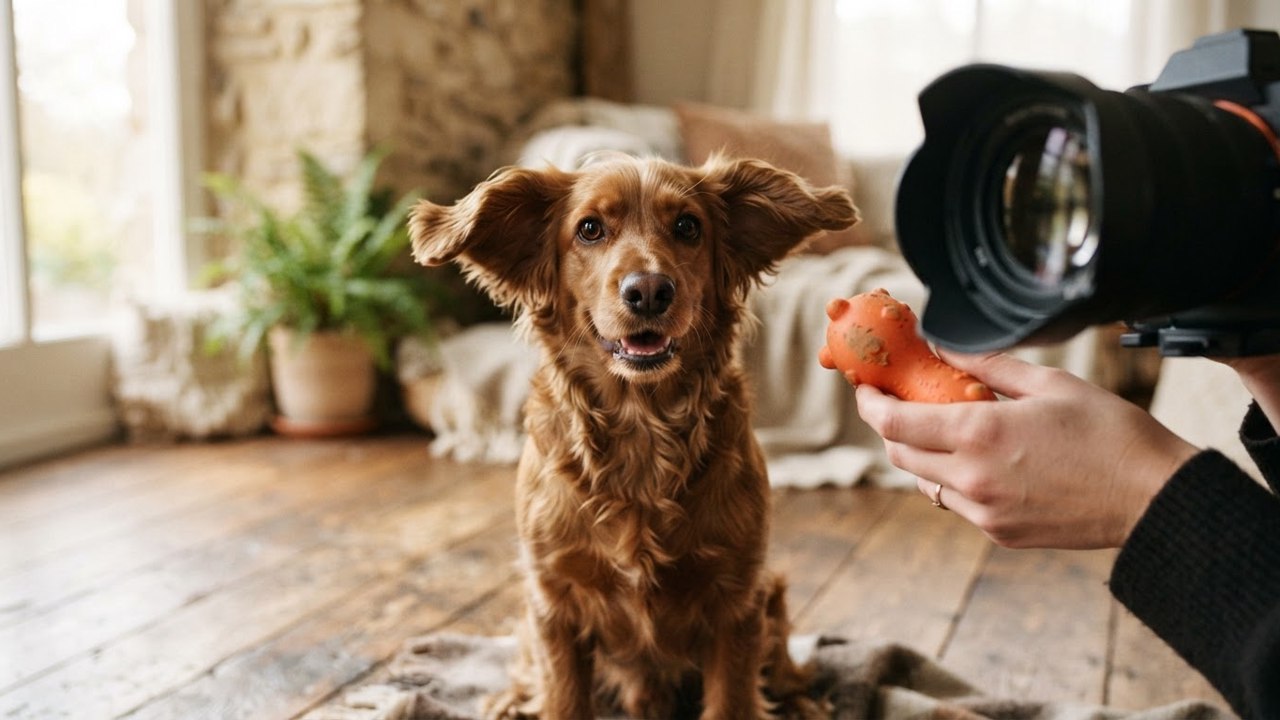
The pet faces the window; you shoot with your back to it. Light falls on the face and coat, the camera sees fur texture and true eye color, and the exposure has something to work with. The reverse — pet between you and the window — is how silhouettes-with-ears happen. If you take one sentence from this page, that's it.
Choose the window, then the hour
- North-facing windows (if you have one): soft, even light all day. The studio window.
- East in the morning, west in the afternoon: warm directional light for mood — lovely for cinematic-style portraits later.
- Midday sun through a south window: harsh and contrasty. Diffuse it for free with a white sheet or thin curtain, or skip to another room.
- Overcast days: every window becomes a north window. Gloom outside means beautiful light inside — the counterintuitive best day for indoor pet photos.
Where to put the pet
One to two meters from the window, angled roughly 45° toward it. That gives light with dimension — one side of the coat slightly brighter — which reads as shape rather than flatness. Right against the glass, light flattens; too far into the room, it dies.
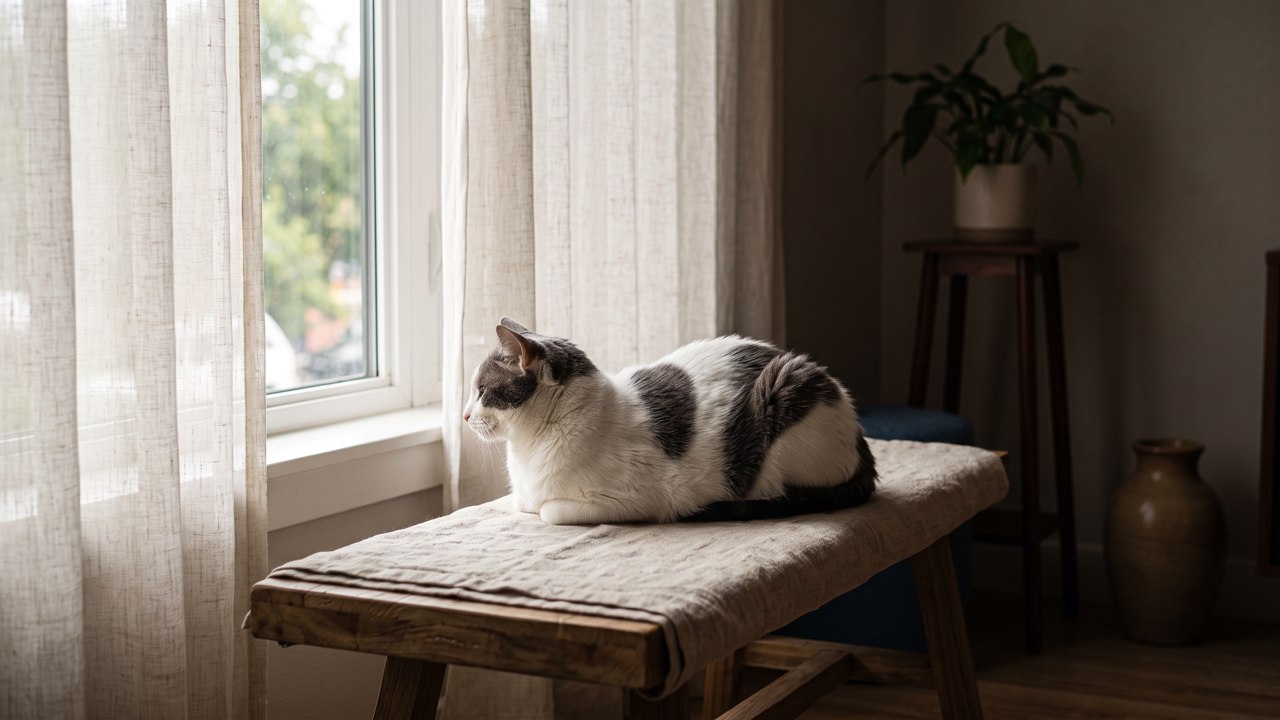
Pets being pets, you can also move the furniture to the pet: a chair or bench by the window turns a sleeping spot into a set. Cats will inspect anything new — the inspection is your shooting window.
Fixing the two classic indoor problems
- "The coat looks black even though it's brown." Underexposure plus warm bulbs. Get closer to the window, tap the face and drag exposure up slightly, and turn off the overhead lights (next point). Dark coats get their own full treatment in the black-coat guide.
- "Everything is yellow." That's tungsten bulbs fighting daylight. Mixed light sources have no single white balance, so the camera compromises into a yellow-gray mess. Pick one: window light only (turn lamps off) or — deep evening — lamps only, same type throughout.
The one lamp rule
If you must shoot after dark: one lamp, slightly to the side and above the pet's eye line, shade on, facing a white wall if you can — the wall becomes the soft light source. Never point a bare bulb at a pet (harsh, and they'll squint or leave). And still never the flash — for all the usual reasons.
Why indoor skills pay twice
Indoor window light is also how the best reference photos are made: even, true-colored, low-contrast — exactly what the model extracts identity from best. A five-minute window session produces the face and coat shots that the reference set asks for, and every portrait downstream gets better.
Frequently asked questions
My pet never goes near the window. Ideas?
Bring the window to them: open curtains fully, turn off competing lights, and use the brightest room they do like. A treat-station by the window for a week also works — pets learn geography fast.
Phone night mode or window-and-wait?
Window-and-wait, whenever it's an option. Night mode brightens a dark frame but softens fur and smears movement — and pets are movement.
Hard floors, white walls — good or bad indoors?
Good: both bounce light back into the coat for free. The harsh-contrast indoor failures are dark rooms with one small light, not bright rooms with big surfaces.