Every pet owner knows the sequence: raise the phone, call the pet's name, get one blurry glance, then the back of a head for the next four minutes. Attention is the one part of pet photography you can't buy — but you can borrow it, briefly, on purpose. Here are nine tricks, ordered roughly by how well they work across species.
The nine
- The unfamiliar sound. Not a kissy noise — a different kissy noise. Attention responds to novelty; the sound you use daily is furniture. Try a crinkling treat bag, a squeaker squeezed exactly once, a click of the tongue at a new pitch.
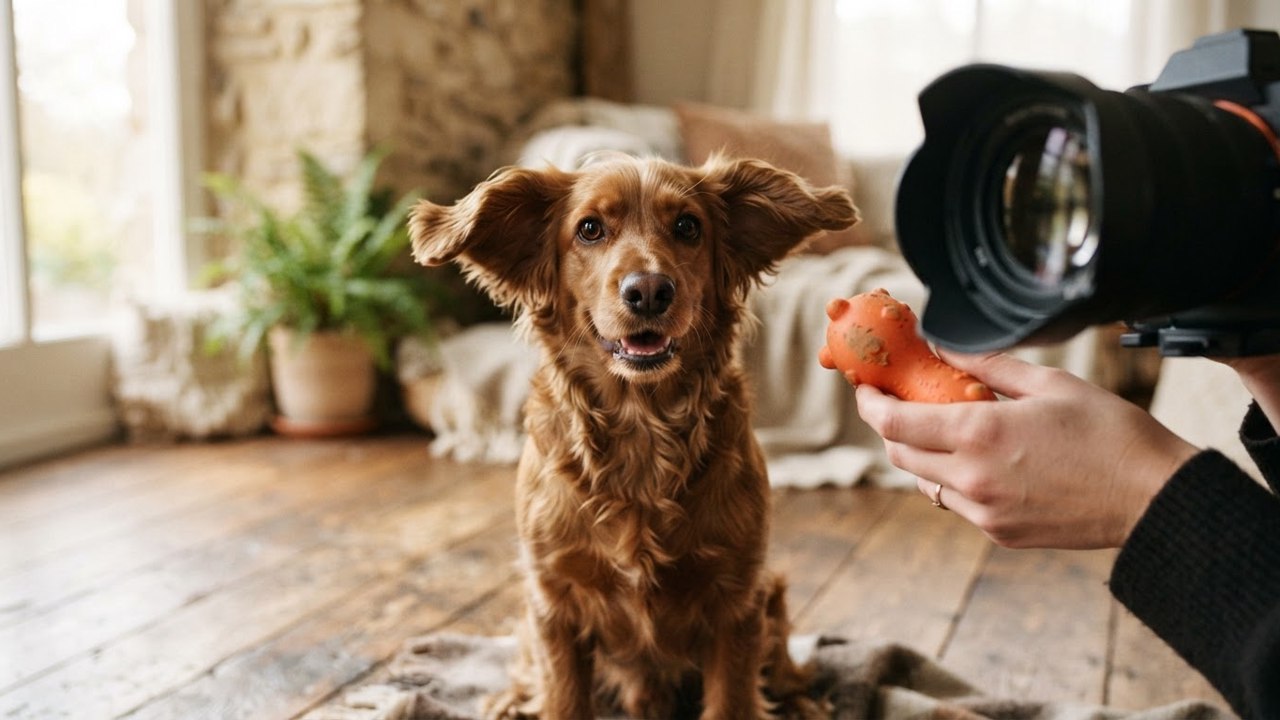
- The lure held at the lens. A treat or toy touching the phone, held by a second person if possible. Above the lens gives chin-up nostril shots; at the lens, just below, gives level eye contact.
- Say a forbidden word. "Walk." "Treat." The words that never fail in life fail even less on camera. Use once — the second utterance is ignored.
- The two-person setup. One person at the pet's eye level with the lure, one behind the camera. This is how the professional-looking attention shots are made; a housemate and ten seconds is all it takes.
- Shoot after play, before food. A slightly tired, moderately hungry animal is the perfect attention economy: alert, food-motivated, not vibrating.
- Burst everything. The ears-up moment lasts about two seconds. Hold the shutter and pick later; the main guide covers the settings half.
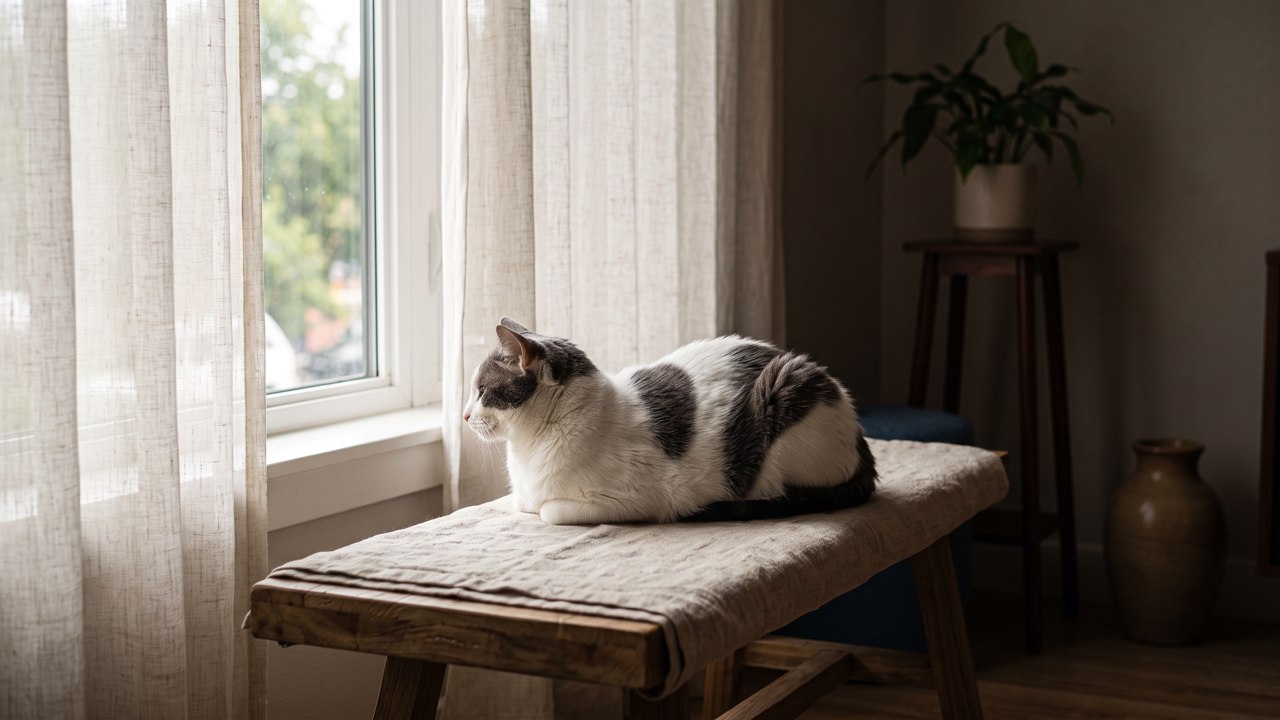
- Put the pet where the interesting thing is. On a bench by a window, on a table (cats) with the camera at their new eye level. New perch, new attention.
- Train a "watch" cue — in a week. Say "watch," immediately give a treat, ten reps a day. Most dogs generalize it to the camera in days; it's the trick behind every competition obedience photo.
- Give up on eye contact deliberately. The ears-forward profile, the head turn a beat after you call, the caught-in-motion look at your helper — these are better photographs than a stiff stare, and they're what the camera was waiting for anyway.
Species notes
Dogs: tricks 1–4 work within a session. Cats: novelty rules — a sound that worked Tuesday is dead by Friday; rotate. The most reliable cat attention device ever invented is a second cat walking into the room. Small animals: quiet rustling beats noise; never force the angle.
Why this matters for portraits
The attention photo — sharp eyes, ears up, face toward the lens — is the single most valuable reference photo in the reference set: it carries the face and expression the model most needs. Thirty seconds of trickery here improves every portrait that follows.
Frequently asked questions
My pet ignores every sound. Now what?
Trick 9 is a real answer, not a concession — profile and candid shots carry identity better than a forced stare. For the one face-forward reference you need, the two-person setup (4) succeeds where sounds fail.
Are treats okay if my pet is on a diet?
Use the daily kibble ration as the lure — the novelty is in the delivery (at the lens, on cue), not the calories.
How long should a session last?
Stop while it's still fun: a few minutes, a handful of bursts. Sessions that end on a success make the next session easier — attention training compounds.