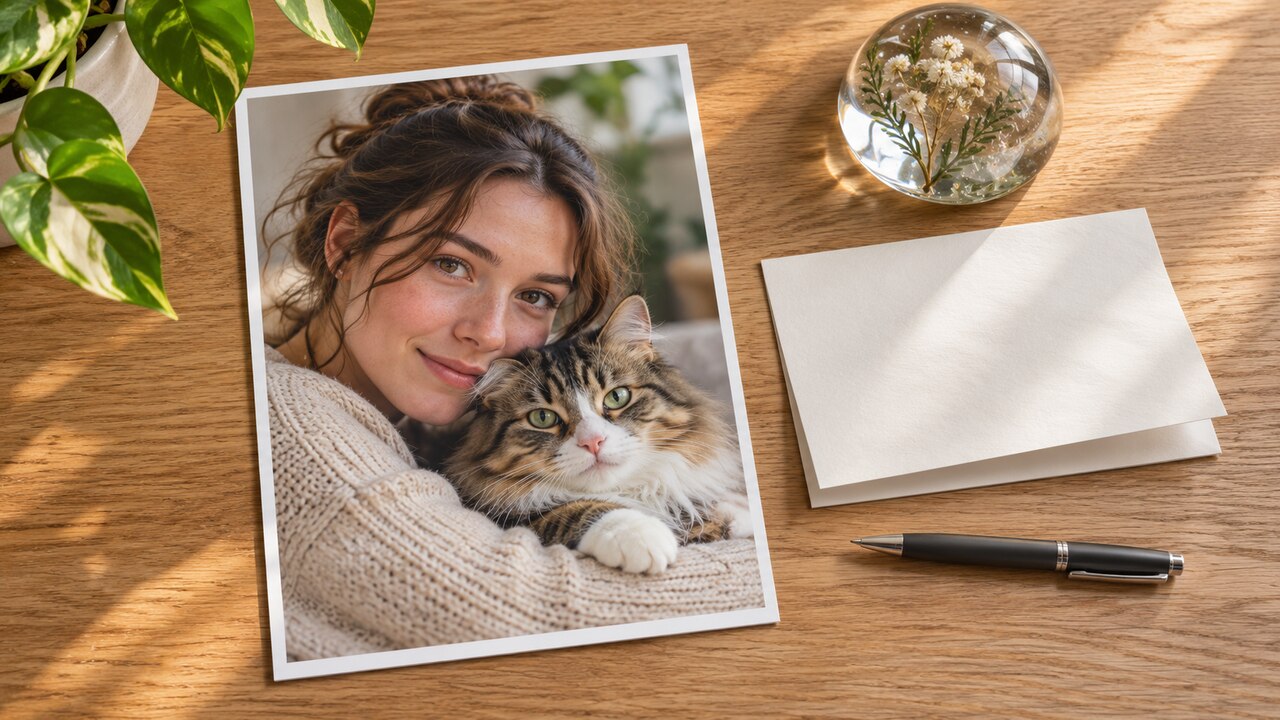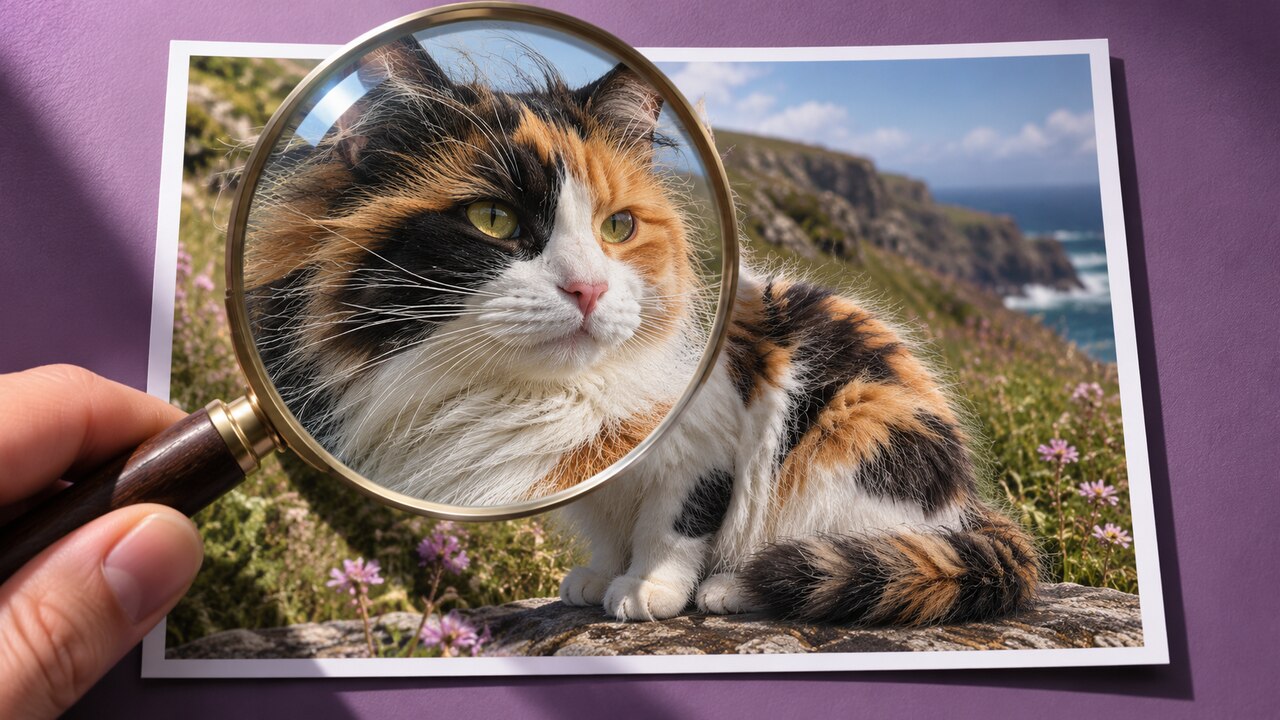
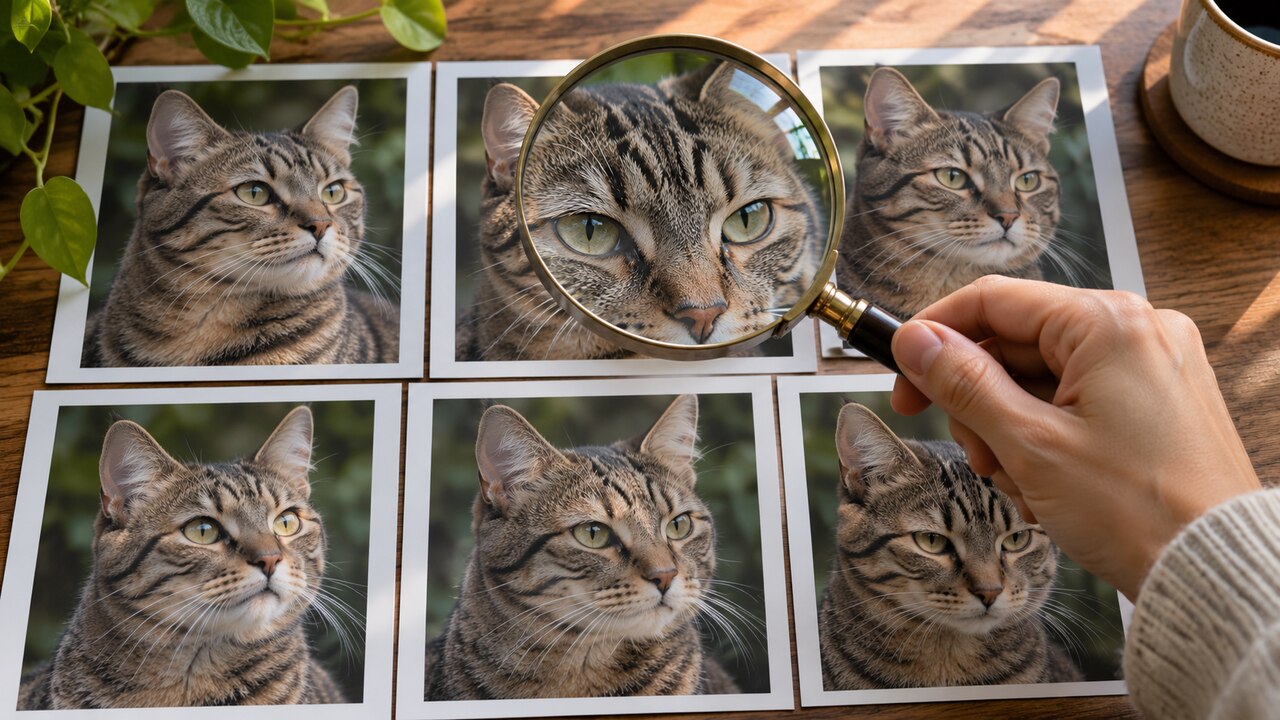
AI portraits fail in public spectacles — six-fingered hands, dogs with two tails — but the failures that matter to your portrait are quieter and more fixable. There are four real failure modes, each with a known cause and a known fix, and one rule that applies to all of them: a failed run never costs you credits.
Failure one: anatomy
What it looks like: an extra limb, a merged paw, a hand that grips the collar from the wrong side. The famous category.
Why: the model renders anatomy from learned probability, not from a skeleton. Complex contact — hands near fur, two bodies overlapping — is where probability has the most freedom to go wrong.
The fix: simplify the contact. "Her hand rests on the collar" fails more often than "she sits beside the dog, both facing the camera." Put bodies side by side and let the scene carry the warmth; add contact once the base pose renders cleanly.
Failure two: identity drift
What it looks like: it's a golden retriever, not your golden retriever. The blaze is missing, the socks migrated, your face is a cousin of yours.
Why: references steer identity but don't lock it — and every rerun re-rolls the dice. Drift gets worse when the reference is vague or the prompt never names the markings.
The fix: the two-channel method — a reference photo that shows the full markings map, plus the markings written into the prompt verbatim. The markings guide is the complete version; it's the single highest-yield fix in this list.
Failure three: the uncanny interaction
What it looks like: both subjects rendered well, but the relationship is wrong — the pet floats beside the person, eye lines don't meet, the pose is physically possible and emotionally impossible.
Why: the model composes each subject separately and then composes their relationship; the second composition is the harder one.
The fix: prompt the interaction as an action, not a layout: "the cat leans against her leg" beats "a woman and a cat sitting together." And check the review checklist — interaction is one of its four lines for exactly this reason.
Failure four: rejection
What it looks like: the run fails immediately with a rejection — most commonly a start frame that includes a recognizable human face, AI-generated faces included. Pet-only frames are not rejected.
Why: content review runs before generation, and human likeness is where it's strictest.
The fix: a pet-only crop, a from-behind framing, or keeping your face out of the video's first frame. The rule and its workarounds are detailed in the photo-to-video guide.
What we do about it, on our side
- Failed runs are refunded automatically. Errors and rejections return their credits; you pay for results.
- Every quote is shown before the run — how credits work — so experiments are priced honestly.
- The workflow assumes iteration: draft tiers for tests, the review checklist for judging, one change per rerun. The first result is a draft in a system designed for drafts.
Frequently asked questions
I keep getting anatomy errors on the same pose. Give up?
Change the pose, not your luck. Persistent errors on one composition mean that contact pattern is hard for the model — simplify the contact and the error disappears.
Is a "nearly right" result worth keeping?
Often yes — a portrait with one soft element may be the base for a better rerun, and your history keeps it. Keep the near-misses; they're the cheapest starting points.
Do rejections mean my photo is banned?
No — a rejected run rejects the request, not the photo. The usual cause is a visible human face in a video start frame; the pet itself was never the problem.